The Physics of the Roundhouse Cutback

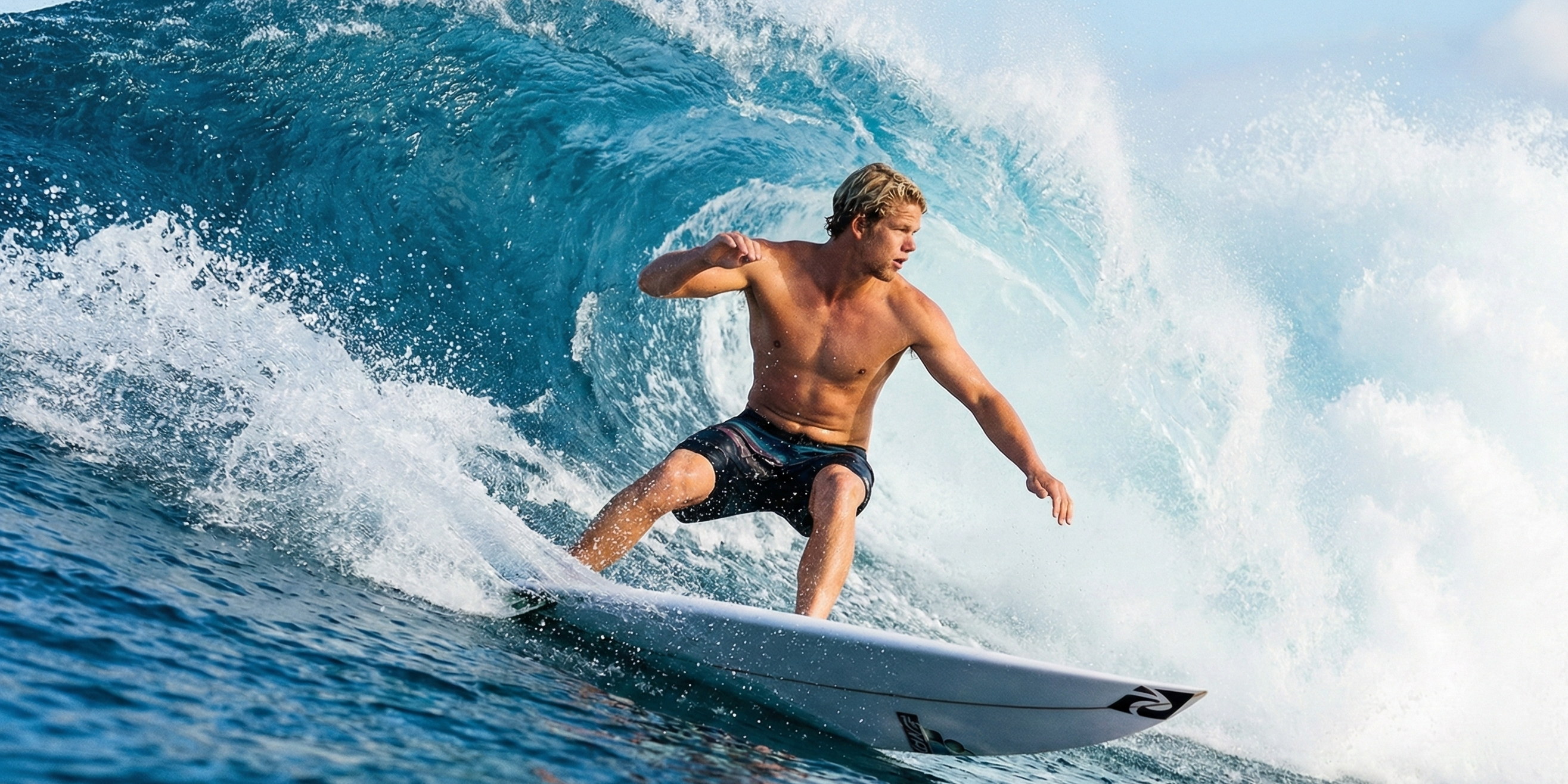
TL;DR: To nail a roundhouse, you must carry excessive speed through a shallow bottom turn, lock your eyes on the whitewater rebound, and treat the finish like a backhand snap against the foam.
How the Roundhouse Cutback Actually Works
The most common mistake is treating the roundhouse as one long, continuous carve. It isn’t. A functional roundhouse is a hybrid maneuver: a forehand entry that transitions into a backhand rebound. If you don't shift your mechanics halfway through, you’ll bog your rail and get left behind by the section.
To Go Back, You Must Look Forward
The counter-intuitive truth: You cannot finish a roundhouse by looking at the beach. To whip the board 180 degrees, your eyes must be locked on the "rebound point" (the foam) before the board even starts to turn. Your body follows your sightline; if your eyes stay on the open face, your rail will never release.
Technical Contrast: The Entry vs. The Rebound
1. The Bottom Turn
- Legacy Approach: Going too deep into the flats, losing lateral momentum.
- Modern Approach: A shallow, mid-face bottom turn that preserves maximum velocity for the wrap.
2. Body Torsion
- Legacy Approach: Shoulders squared to the nose, leading to a "stiff" arc.
- Modern Approach: Leading with the front arm and snapping the head over the trailing shoulder to trigger a rotational chain reaction.
3. The Rebound (The Finish)
- Legacy Approach: Bumping the whitewater and falling toward the beach.
- Modern Approach: Treating the foam as a "rebound wall." Using the backhand "hit" to push the board back into the power source.
Coach’s Cue: "Don't just turn the board; aim for the foam. If you aren't hitting the whitewater, you're just doing a long, slow cutback."
The Geometry of the Wrap
Visualizing the arc is simple: it’s a figure-eight. The "Transition Point" happens at the apex of the curve. This is where your weight shifts from your inside rail to a neutral stance, preparing for the backhand hit. If you hold the rail too long, the board will dig in and "trip" over its own wake.
The Next-Session Blueprint
- The Pre-Surf Observation: Watch the "fat" sections of the wave. Identify where the wave shoulder slows down but the foam remains active. This is your target. Notice how the best surfers start their turn before the wave goes completely flat.
- The In-Water Focus (The "Eye-Lock" Cue): The moment you initiate the wrap, force your head to look back at the foam. Do not look at your feet or the beach. If you can see the whitewater you’re about to hit, your hips will naturally follow and complete the rotation.