Pipeline: How the Reef Works
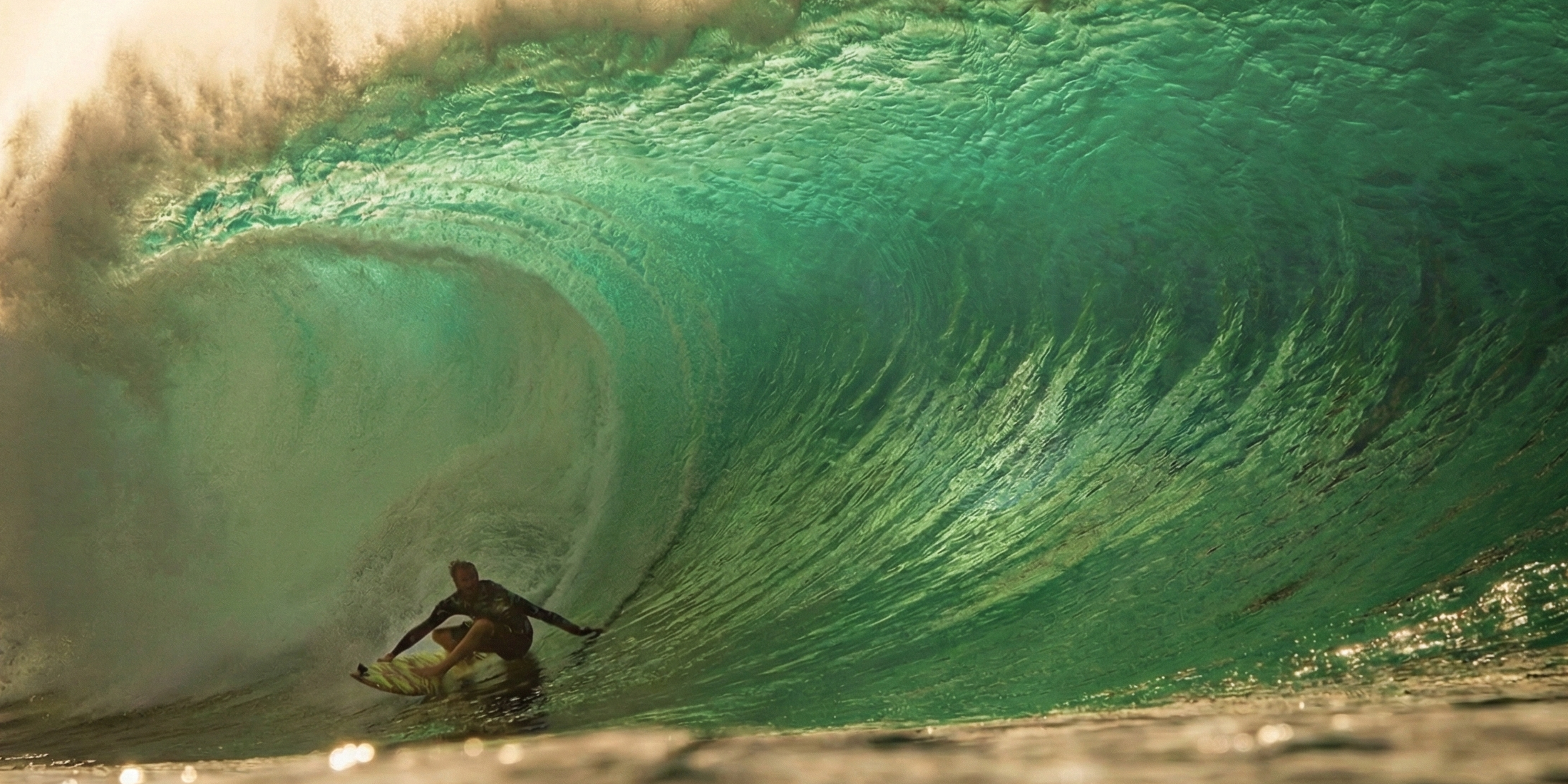
Why sand, swell angle, and a freshwater trench dictate your ride.
TL;DR: Pipeline is a seasonal wave. To surf it, you have to understand how west swells "clean" the reef, how to spot the 315° "A-frame" angle, and why aiming for the freshwater channel is your only safe exit strategy.
1. The Sand Problem: Why You Wait for West Swells
Most people think the reef is always ready. It’s not. During summer, the lava shelf fills with millions of cubic feet of sand.
If you try to surf the first swell of the season, the wave "pinsches" because the sand hasn't cleared. You need a violent, early-season West Swell to scour the reef. That energy strips the sand off the lava and pushes it down the beach toward Rocky Point. Only once the reef is "naked" does the barrel become organized and predictable.
2. The 315° Sweet Spot
Swell direction is everything at Pipeline. A 5-degree shift changes the lineup from a death-trap into a playground.
- West Swell (295° – 310°): This is "Classic Pipe." The energy hits the reef and peels hard into the left.
- Northwest Swell (315°): The Magic Number. This creates "A-Frames." You get a peak that offers a left (Pipe) and a right (Backdoor), effectively doubling the wave count and spreading out the crowd.
- North Swell (>330°): Avoid this. The wave starts to "close out." It becomes sectiony, unpredictable, and much more likely to drive you into the reef.
3. The Drop: Disconnect to Re-engage
The reef at Pipeline is incredibly shallow. The transition from the trough to the lip is almost vertical.
If you try to "angle" your takeoff like you’re at a beach break, the offshore wind will catch your nose and flip you over the falls. You have to take the "Heavy Moment." This means dropping straight down—briefly disconnecting from the water—and only setting your rail once the board "bites" into the trough at the bottom.
Coach’s Cue: "Wait for the drop to finish before you start the turn. If you pull the trigger too early, you’ll lose your fins in the air."
4. The Ehukai Channel: Your Exit Map
Pipeline exists because of a freshwater stream. Over thousands of years, freshwater runoff from the land prevented coral and lava from building up in one specific spot. This created the Ehukai Channel.
This deep-water trench is why the wave "backs off" at the end. When you're in the tube, you aren't just looking for the light; you're looking for the spot where the water depth suddenly increases. That depth change causes the lip to stop throwing, allowing you to kick out safely instead of being driven into the "Gums" section.
The Next-Session Blueprint
- Lineup Observation: Watch the "spit." A clean, horizontal burst of mist means the wave is breathing and the exit is open. A vertical, weak spray means the wave is pinching—likely due to leftover sand on the reef.
- In-Water Drill (The Technical Stall): On a head-high day at your local spot, practice the "arm drag." Use your trailing arm to slow yourself down deep in the pocket, then release and "unweight" the board to feel the burst of speed as you exit the section.